Welcome to Ancient Greek Philosophy
Perfilado de sección
-
Destacado
Foundational Philosophies
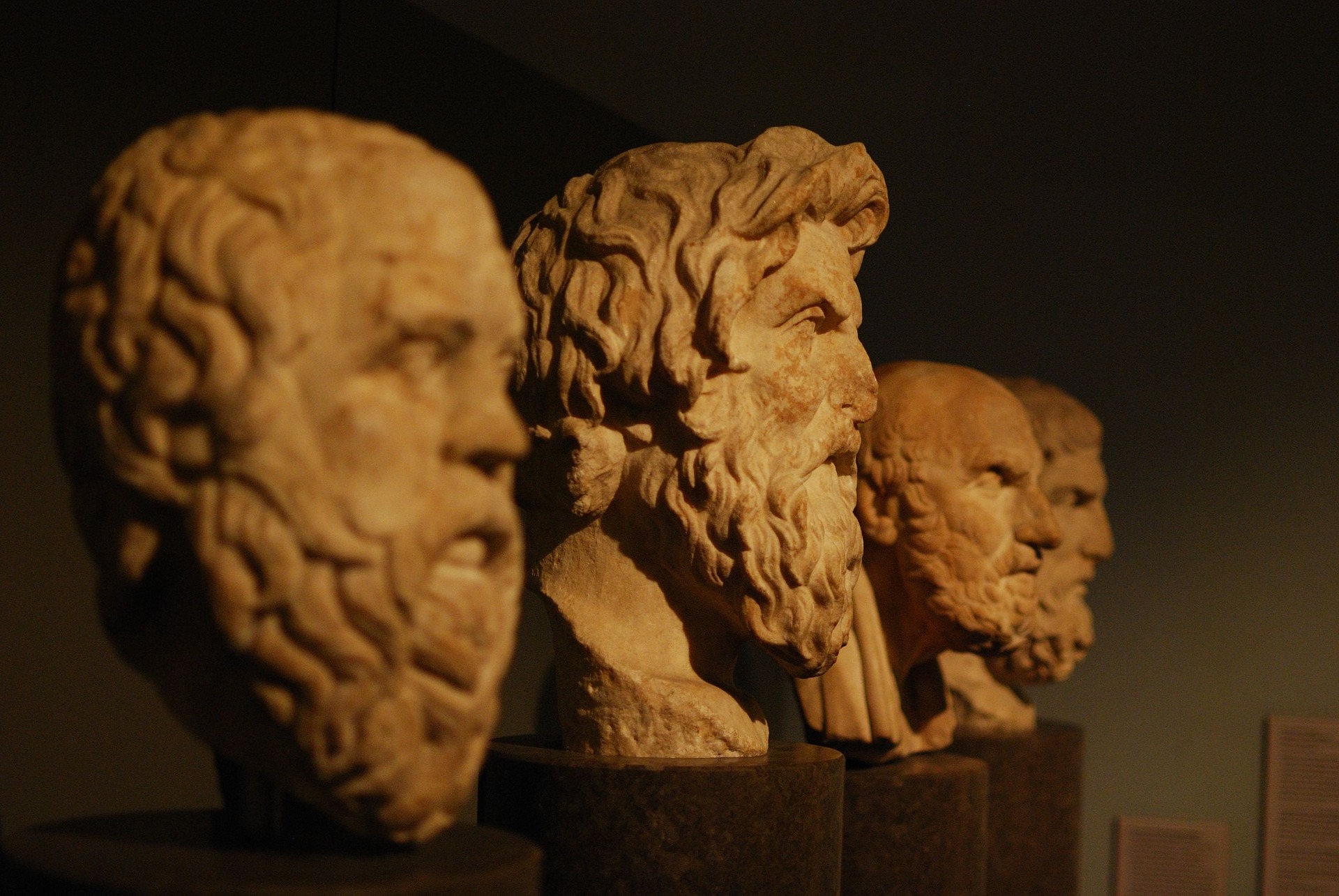
Greek philosophy forms a foundation from which a history of thought in Europe proceeds, though it is important to note that we can locate other foundational, and predating philosophical thought in other regions of the world that deserve equal attention. In this course, we will explore specifically Ancient Greek philosophy, from the early Skeptics through Plato and Aristotle, finishing with Antisthenes and the Cynics. We will continuously try to apply these concepts to modern phenomena as well as other global philosophies.
Course Objectives:
At the end of this course, students will have learned:
- Major themes and arguments in early Greek philosophy
- Describe the historical development of Greek thought, as well as its global antecedents in Africa and Asia
- Participate in a Socratic Dialogue
- Demonstrate understanding of the Allegory of the Cave in various contexts/media
- Identify Greek philosophers and their particular schools/associations of thought
- Consider fundamental questions in Greek thought in contemporary contexts
Grade Breakdown + Assignments:
Discussions and Participation (20%)
Students will contribute to weekly discussions (click here for DISCUSSIONS). Students are encouraged to start their own discussion threads, and use multimedia in their responses and postings. Instructors will assess contributions weekly on a scale 0-5 points.
Allegory of the Cave Multimedia Project (25%)
Students will work in small groups to make an artistic/design representation of Plato's famous Allegory of the Cave. Multimedia creations and performances should be accompanied by explanatory texts that discuss relationships with the expression and the Allegory. Visit the project rubric HERE
Midterm Thought Piece (25%)
Reflection as a knowledge-making practice is an essential part of Greek philosophy and being. In 3-6 pages, apply 2 of the key questions raised in the Socratic Dialogues to contemporary events or issues. Think about how your own experiences and history influences your perspective on these questions and events. Visit the Thought Piece rubric HERE
Final Synthesis Paper (30%)
In 8-10 pages, compare two Greek philosophers contrasting and complementary thoughts. Try to reproduce or even construct how the two thinkers would engage in dialogue with each other. Play out the arguments and add examples or illustrations to elaborate key points. In the end, take a side and argue this point to its conclusion. Visit the Synthesis Paper HERE
Statement on Academic Integrity and Accessibility
Students will collaborate and work with each other often. It is important that students are respectful of others' perspectives and empathetic of each other's needs when working in groups online. When referencing the work of others in discussions, cite where you found materials, or if you are paraphrasing ideas of a peer. We also believe that all learners have a right to learn. All the content and activities in this course should be accessible to all students. If a student has difficulty accessing or completing any content or activities, please contact the instructor for either an accommodation or accessible content.
Proceed to Module 1: The Skeptics